Unfortunately, due to the ongoing conflict in the Middle East, shipping lines have temporarily suspended shipments to and from Oman until further notice.


Customer advice
How to ship electronics
Key takeaways
- The best way to ship electronics overseas as unaccompanied baggage is to follow the customs rules for your destination, ensure your paperwork is accurate and always comply with your shipping carrier’s restrictions to avoid extra charges and delays.
- The cost to ship electronics depends on the size and weight of your shipment, the origin and destination countries, and whether you use air or sea shipping.
- To package electronics for shipping, pack each item securely to ensure safe handling during storage, transport and customs checks.
Choose us for expert moving overseas advice

Best way to ship electronics
The best way to ship electronics overseas as unaccompanied baggage is to follow the customs rules for your destination, ensure your paperwork is accurate and always comply with your shipping carrier’s restrictions to avoid extra charges and delays.
When sending electronics such as laptops, gaming consoles, or kitchen appliances to another country, you must adhere to the destination country’s import rules and clearly state each item’s purpose and value. Many countries treat new and used items differently. If your shipment is considered personal effects, you may have to pay less tax or receive an exemption, as long as you can show ownership and are not shipping them for commercial use.
You will also need to provide the following paperwork when shipping electronics:
- A detailed inventory describing each item (e.g. make, model, and value).
- Proof of ownership, where possible (such as receipts or a declaration of prior use).
- Completed customs declaration forms required by the destination country.
And don’t forget to check for restrictions on items containing lithium batteries, as these are typically subject to different rules. Lithium batteries are used in many devices, from smartwatches and wireless headphones to power tools and e-bikes. They store a lot of energy in a compact space, which makes them efficient, but also risky during shipping. If handled incorrectly or damaged, they can overheat or catch fire, especially during air transit. Because of this, many shipping companies impose limits on battery size, quantity, and whether they are installed in a device or sent separately.
Using a specialist international shipping company makes the process easier. They will guide you through country-specific regulations, handle customs clearance, and help you bypass unexpected fees.

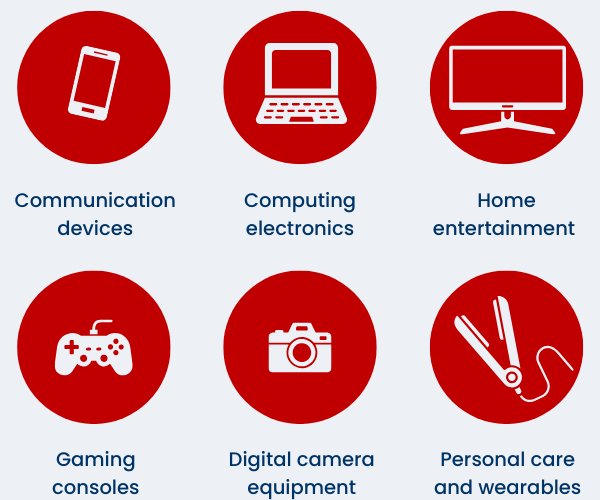
What are consumer electronics?
Consumer electronics are everyday devices that run on electricity and are meant for personal use.
They include mobile phones, home-office gadgets, entertainment systems, gaming consoles, cameras, wearables, and much more.
How much does it cost to ship electronics?
The cost to ship electronics depends on the size and weight of your shipment, the origin and destination countries, and whether you use air or sea shipping. Customs rules, insurance, and if your electronics are being sent as part of a personal effects shipment, can also change the final price.
With so many factors, the best way to get an accurate shipping cost is to request a free, instant quote tailored to your needs. For smaller loads, our Boxes and Bags Shipping service is ideal. Whereas our self-load MoveCube® container offers a secure option for transporting bulkier appliances.

Accurate labelling helps customs officials identify content quickly and reduces delays.
How to package electronics for shipping
To package electronics for shipping, pack each item securely to ensure safe handling during storage, transport and customs checks. A step-by-step approach is the best way to reduce the risk of damage.
First, turn off each device, remove batteries if possible, and disconnect all cables and accessories. This prevents an accidental power drain or short-circuiting during transit. For electronics with lithium batteries, follow the carrier’s rules, as some require batteries to remain installed, while others restrict shipping loose batteries.
Next, cover each item in plenty of bubble wrap secured with parcel tape, and place them in either the original container they were packed in or a strong, double-walled cardboard box. As electronics are sensitive to vibration and impact, keep them stable throughout the journey by filling empty spaces in boxes with crumpled paper or other cushioning materials.
Finally, clearly label the container to match your shipping documentation. Accurate labelling helps customs officials identify content quickly and reduces delays. Combined with the correct paperwork and compliance with lithium battery regulations, careful packing ensures safe and efficient delivery.
Discover more helpful packing advice

How to choose a box for shipping
Read this handy packing guide to discover which boxes are unsuitable for international shipping and which will keep your belongings safe.

How to pack fragile items
During international shipping, your fragile items will pass through numerous stages, follow these packing tips to ensure their safety. Read more here.

How to load a MoveCube®
Follow the steps in this helpful guide to learn how to securely load a MoveCube® ready for domestic or international shipping.

Guide to safely shipping lithium batteries
Read our guide on how to safely ship belongings containing lithium batteries overseas, including packing and labelling tips and insurance advice.
Sign up to find outmore about our MoveCube®!

Looking for safe and secure international shipping and removals?