Unfortunately, due to the ongoing conflict in the Middle East, shipping lines have temporarily suspended shipments to and from Oman until further notice.


Customer advice
How to ship an electric bike internationally
Key takeaways
- To ship an electric bike internationally, book a shipping service, clean the bike of all organic matter, detach any accessories, and pack it in a strong box with its lithium-ion battery charged to no more than 30% and the terminals insulated with electrical tape.
- E-bike types are grouped into three main categories based on how they assist the rider: Class 1, Class 2, and Class 3.
- To pack your e-bike, switch off the power, remove the front wheel, saddle, and handlebars, protect vulnerable areas with foam, wrap in bubble wrap, and place it in an appropriately sized box filled with cushioning materials and sealed with parcel tape.
Choose us for expert moving overseas advice

The only thing better than a picturesque cycling holiday is one with the effortless ease of an e-bike.
How to ship an electric bike internationally
To ship an electric bike internationally, book a shipping service online, clean the bike of all organic matter, detach any removable accessories, and pack it in a strong bike box with its lithium-ion battery charged to no more than 30% and the terminals insulated with electrical tape.
The only thing better than a picturesque cycling holiday is one with the effortless ease of an e-bike. Whether you fancy cruising along Tokyo's neon-lit avenues or conquering the French Alps with an uphill thrust, sending your battery-powered companion across borders is easy with our international shipping company.
Simply book online before setting off (check whether your hotel is happy to accept your e-bike before your arrival!). We'll collect it from your home, arrange customs clearance and deliver it to your chosen destination.
To help you prepare your e-bike for shipping, we've put together a guide that explains the entire process, covering everything from cleaning and packing your e-bike to shipping e-bike accessories and navigating import rules and regulations.
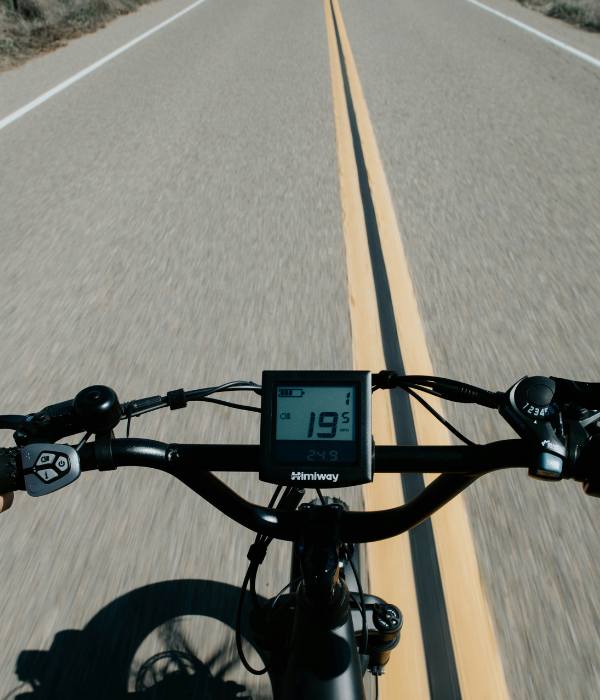
How much does it cost to ship an e-bike?
The cost to ship an e-bike depends on its boxed dimensions, weight (e-bikes generally weigh 45-80 lbs/20-36kg), how soon you need it, and your origin and destination addresses. Use our instant quote tool for a transparent cost breakdown specific to your needs.
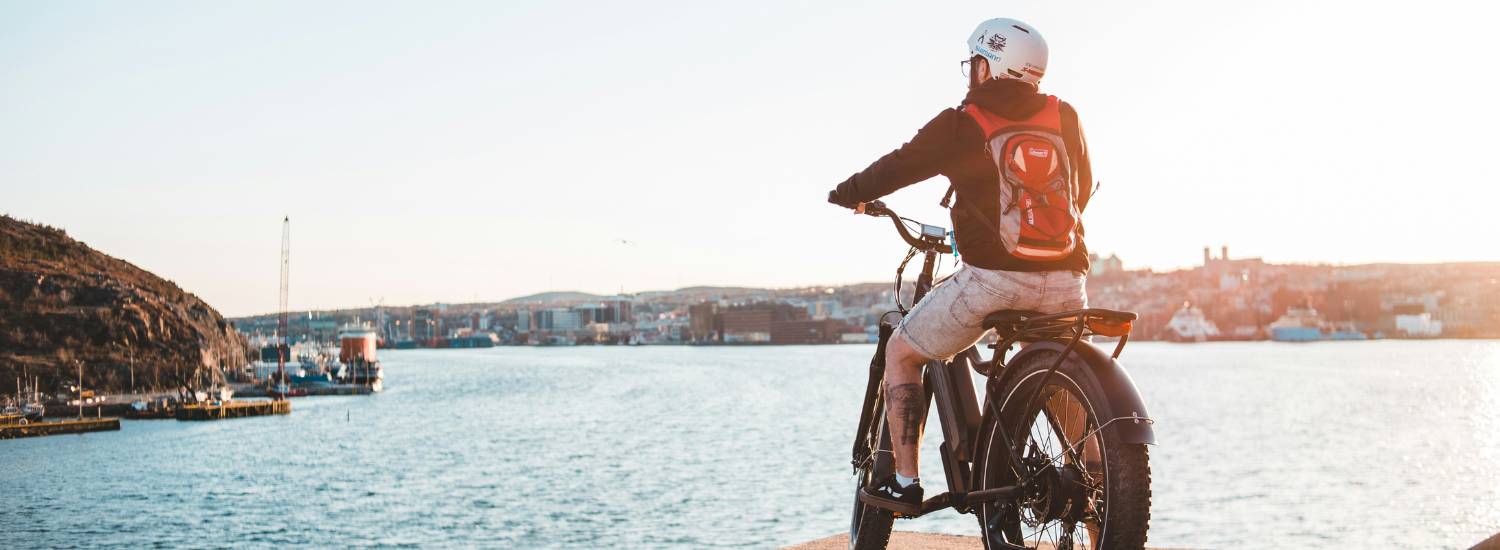
Different types of e-bikes
E-bike types are grouped into three main categories based on how they assist the rider: Class 1, Class 2, and Class 3. It’s important to know the type of battery-powered bicycle you’re shipping overseas, as import regulations vary significantly from country to country.
The rules for importing an e-bike depend on battery size, weight, and chemistry; motor power output; maximum speed; manufacturer and product certification; packaging and transport requirements; and e-bike type and propulsion system.
Below is further information about each of the three e-bike classes:

Class 1 - Electrically Power Assisted Cycle (EPAC):
Pedal-assist e-bikes require the rider to pedal for the motor to operate.
The electric motor activates automatically when pedalling begins and provides assistance only while the rider is pedalling.
These are subject to less restrictive regulations in many countries.
Class 2 - Power-on-demand/throttle-based:
Throttle-based e-bikes allow the motor to operate independently of pedalling.
The motor is controlled by a throttle mechanism, similar to a motorcycle.
As the motor powers the bike without pedalling, these models are subject to stricter import requirements.
Class 3 - Speed Pedelec (High-Speed Pedal Assist):
These high-performance pedal-assist e-bikes provide assistance up to 45 km/h (28 mph).
Because they cross into moped-like speeds, these bikes face the strictest regulations, often requiring mirrors, specific product certifications, and distinct import classifications.

Before packing, ensure you are up to date on the specific e-bike rules and import laws...
E-bike shipping restrictions
In terms of e-bike shipping restrictions, many countries align their definitions of battery-powered bicycles with BS EN 15194, which sets limits of 250 watts motor power and 25 km/h pedal-assist speed. Electric bikes that exceed these thresholds are often reclassified as motor vehicles and may require additional approval or be restricted from import altogether.
Regulators impose such strict import and usage regulations to ensure public safety and establish clear legal definitions. Because they have heavier frames and travel at much higher speeds than traditional bicycles, they pose higher impact risks and require greater stopping distances.
Because modern e-bikes rely on large, powerful lithium-ion batteries, regulators classify them as dangerous goods, enforcing rigorous international packaging, shipping, and product certification standards to prevent fire risks during ocean or air freight.
If you are shipping batteries within the e-bike, they must meet international dangerous goods requirements, including UN 38.3 testing, appropriate hazardous goods packaging, correct labelling and marking, and adherence to permitted state-of-charge limits.
Your e-bike may also require a permit, particularly in countries that set power thresholds (for example, 250 watts) or base requirements on maximum speed limits.
Before packing, ensure you are up to date on the specific e-bike rules and import laws for your destination country to avoid delays, fines, or confiscation. Seven Seas Worldwide does not ship e-bikes by air, and several of our destination countries do not accept batteries shipped separately. Please reference our Prohibited Goods page for the latest information.
How to ship an e-bike battery
To ship an e-bike battery internationally, you must comply with lithium-ion regulations. Lithium batteries are Class 9 Dangerous Goods, meaning they are subject to strict controls due to fire risk during transport. Check carrier-specific requirements before booking, as many services require you to ship batteries at a reduced state of charge in approved UN-certified packaging* (often UN3480 or UN3481 depending on whether they are shipped alone or with equipment).
Stand-alone batteries may face carrier restrictions or be limited to sea freight only. Always declare the battery accurately, insulate terminals, and use strong protective packing to prevent movement or damage in transit.
*Seven Seas Worldwide does not endorse these products.
Packing your e-bike
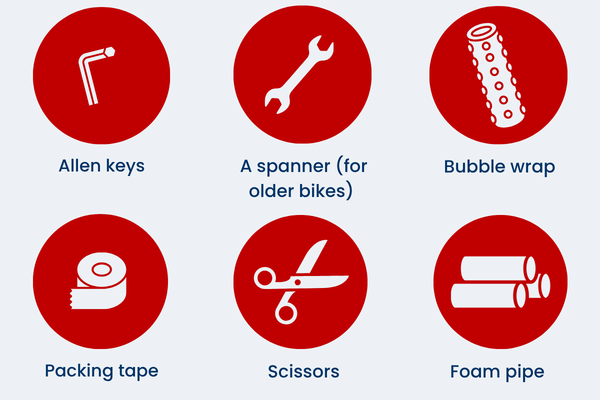
Start by purchasing a large, strong bike box* and gathering your tools. Switch off the bike's power and remove all accessories, including the battery and pedals. Remove the front wheel using the quick-release lever or a spanner on older models.
In some cases, the battery must remain installed on the bike because certain shippers and destinations do not allow lithium batteries to be shipped separately. Where this applies, the battery must be left fitted to the bike and typically charged to a maximum of 30% power. Wrap the battery terminals in electrical tape before reinserting the battery to prevent accidental contact or short-circuiting. Ensure the bike cannot turn on before packing. Once you have inserted the battery, secure it in place with additional tape to prevent it from coming loose during transit.
Next, protect vulnerable areas such as the fork dropouts, axle ends, and rear derailleur using foam or padding to prevent impact damage. Protect the frame using foam pipe lagging*, cut to size with scissors, and secure it with parcel tape. Ensure any exposed cables or wiring are secured so they cannot snag or stretch during movement. Remove the saddle using its quick-release lever, then wrap it in bubble wrap and seal it.
After that, remove the handlebars from the stem with an allen key, then rotate and secure them against the frame with tape to reduce movement. Cover and tape any remaining components, such as the motor casing, display unit, and gears, with extra bubble wrap.
Finally, place the e-bike frame and front wheel inside the box, ensuring all parts are supported. Fill any gaps with cardboard and bubble wrap to restrict movement, ensuring the bike cannot shift in any direction once packed. Seal the box securely with strong parcel tape.
*Seven Seas Worldwide does not endorse these products.
Tools needed to box an e-bike securely:
...gently wipe down the entire e-bike using a fresh cloth dampened with clean, cold water, then dry it thoroughly before reinstalling any components.

How to clean an e-bike
When cleaning an e-bike for international shipping, pay special attention to electrical contacts and component casings. If your destination country's environmental agency finds organic matter, such as grass or soil, you could face fines and fumigation charges. Also, cleaning ensures you receive a sparkling ride on arrival. No one wants to unbox a dirty bike!
Begin by powering off your e-bike, removing the battery and display console, and covering exposed battery ports with waterproof tape*. If possible, position your e-bike securely on a workstand or upside down on a flat surface in your garage or garden. Using a paintbrush, apply some degreaser onto the chain, chainrings, and rear cassette, avoiding the internal motor seals. Run a flathead screwdriver over the jockey wheels while turning the pedals backwards to remove any embedded gunk. Leave the degreaser on for five minutes.
Meanwhile, use a bucket of warm water (mixed with mild soap or an e-bike cleaner*) and a microfiber cloth to wipe down the handlebars, frame, motor casing, and saddle. Then carefully wipe away the degreaser with a damp rag until the grease is gone.
Next, dip a soft, dry detailing brush* into the tight areas around the motor housing and battery mount to flick away loose dirt. Remove the front wheel to clean the forks, brake callipers, and tyre sidewalls, ensuring no soap or oil comes into contact with the disc brake rotors. Repeat the process with the rear wheel.
Finally, gently wipe down the entire e-bike using a fresh cloth dampened with clean, cold water, then dry it thoroughly before reinstalling any components.
Top tip: never use a pressure washer on an e-bike, as such high speeds can force water into sensitive electronics.
*Seven Seas Worldwide does not endorse these products.
Discover more helpful packing advice

How to ship a bike overseas
Read this article to learn how to pack a bike for sending abroad, tips for choosing a reliable international shipping company, insurance options and more.

How to pack our boxes
Read this guide to learn how to securely pack a box of your belongings ready for international shipping or storage.

How to choose a box for shipping
Read this handy packing guide to discover which boxes are unsuitable for international shipping and which will keep your belongings safe.

Guide to safely shipping lithium batteries
Read our guide on how to safely ship belongings containing lithium batteries overseas, including packing and labelling tips and insurance advice.
Sign up to find outmore about our MoveCube®!

Looking for safe and secure international shipping and removals?