Unfortunately, due to the ongoing conflict in the Middle East, shipping lines have temporarily suspended shipments to and from the UAE, Oman, Kuwait, Qatar, Bahrain, and Saudi Arabia until further notice.
We are making user experience upgrades between 06.00 - 12.00 UTC on 07/03/2026. During this time, our website may be disrupted. We apologise for any inconvenience and thank you for your patience.


How international shipping works
Australian customs (prohibited items)
Key takeaways
- Australian customs rules are famously strict, and when shipping unaccompanied belongings to Australia, you must complete a B534 Unaccompanied Personal Effects Statement, listing the contents of your shipment.
- Australia's customs prohibited items list includes illegal drugs, certain foods and seeds, weapons, terrorism materials and fireworks.
- You can bring many everyday personal items into Australia for your own use, including clothing, footwear, personal electronics, and toiletries.
Australian customs rules
Australian customs rules are famously strict due to the country's geographic isolation, which makes it vulnerable to invasive species, pests and diseases. Successive governments have taken a robust approach to biosecurity to protect the country's agriculture, wildlife and health. Even a single piece of fruit or a trace of soil can carry species that could cause irreversible ecological damage. The Australian Border Force (ABF) treats every imported item as a potential risk. As a result, Australia has remained free of many of the world's most devastating pests and diseases, such as foot-and-mouth disease (FMD), African swine fever, and the Colorado potato beetle.
When shipping unaccompanied belongings to Australia, you must complete a B534 Unaccompanied Personal Effects Statement, which lists the contents of your entire shipment. To send everyday household items and goods, such as clothes and furniture, duty-free, you must have owned and used them for at least 12 months prior to their arrival in Australia.
To pass biosecurity, all outdoor items, including shoes, bicycles, and garden furniture, must be thoroughly cleaned before packing. Soil is a primary carrier of fungi, bacteria, and seeds, so use a stiff brush and soapy water to scrub hard-to-reach places, like the soles of hiking boots, the treads of bike tyres, and the undersides of lawn mowers or garden chairs.
Remove all grass, dried leaves, spider webs, and insects (including their eggs) from the frames of sporting equipment and outdoor goods. If you cannot thoroughly decontaminate an item, it is often safer and cheaper to leave it behind, as professional cleaning or border fumigation can be extremely expensive.
Failing to declare restricted items or providing false information on your B534 form is severe. Under the Australian Biosecurity Act 2015, on-the-spot infringement notices for failing to declare high-risk items can range from AU$660 (around US$469/€397) to AU$6,600 (around US$4,692/€3,975) or higher.
Any undeclared prohibited items will be immediately seized and destroyed at your expense. For non-Australian citizens, serious or deliberate breaches may result in immediate visa cancellation and a three-year re-entry ban. In the most extreme cases involving commercial smuggling or significant biosecurity threats, individuals could face criminal prosecution, resulting in up to 10 years' imprisonment and court-imposed fines exceeding AU$1M (around US$707,705/€603,025).
How much alcohol can you bring into Australia?
Adults over 18 can bring up to 2.25 litres of alcohol into Australia duty-free. This allowance applies per person and covers all types of alcohol, including wine, beer, and spirits.
If you wish to take more than 2.25 litres, you must declare it on your Incoming Passenger Card. Border Force officers will calculate the duty and tax you need to pay on the full amount, not just the amount over 2.25 litres.
However, if you're shipping alcohol as unaccompanied luggage, there is no duty-free allowance. The 2.25-litre tax-free concession only applies to alcohol that is on your person or in your checked bags.
Any alcohol sent separately is subject to customs duty, Goods and Services Tax (GST), and potentially the Wine Equalisation Tax (WET). You must provide a detailed list of every bottle, including its volume, alcohol percentage, and purchase price.
Seven Seas Worldwide prohibits the shipping of alcohol on all of our services. Please reference our Prohibited Goods page.
How much does shipping alcohol into Australia cost*?
- Wine: a 0-5% customs duty (0% if your origin country has a free trade agreement with Australia), 29% WET, and 10% GST.
- Spirits: often carry a high excise duty based on the "litres of pure alcohol" content, plus 10% GST. This can sometimes double the bottle's original price.
- Beer: tax is calculated based on the alcohol strength above 1.15%, plus 10% GST.
*taxes depend on product type, value and tariff conditions.
Australia customs prohibited items list
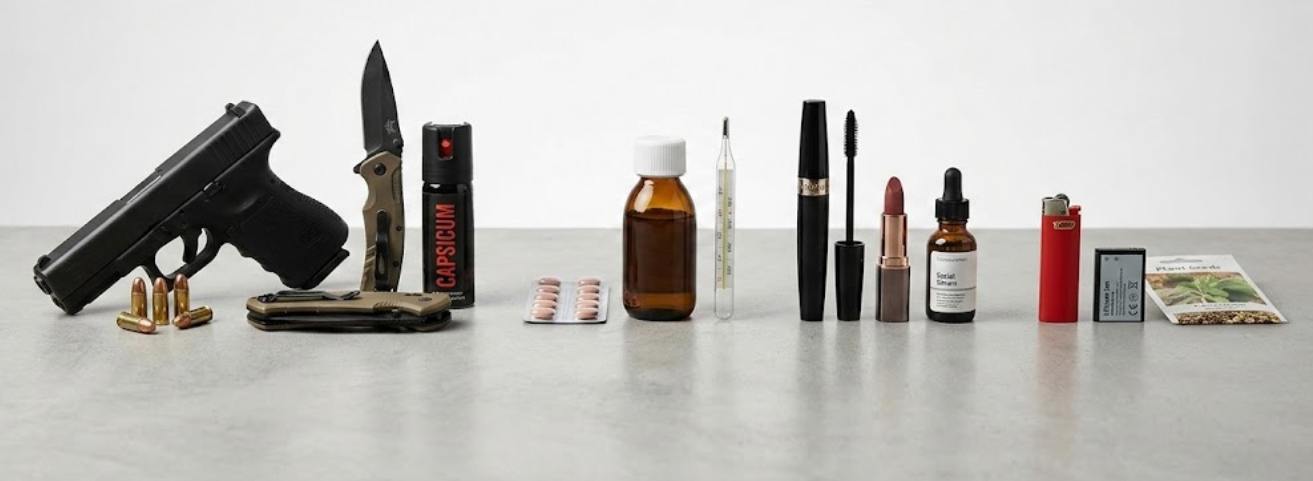
Australia's customs prohibited items list includes illegal drugs, certain foods and seeds, weapons, terrorism materials and fireworks.
IATA regulations strictly govern air shipping and classify items such as aerosols, perfumes and loose lithium batteries as dangerous goods requiring specialised handling. Sea shipping is also subject to rigorous biosecurity measures, including mandatory Brown Marmorated Stink Bug (BMSB) treatments from September to April for cargo from high-risk countries. You cannot carry protected wildlife, ivory, coral or products made from endangered species without approval and a permit, such as a CITES permit.
For a comprehensive and up-to-date list of items you can and cannot bring into Australia, and those that must be declared, check out the ABF's Can you bring it in? list.
As of 2026, the ABF bans or severely restricts the following items:
| Item | Status | Notes |
|
Automatic knives
|
Prohibited |
Includes flick knives, switchblades, and assisted-opening knives.
|
|
Concealed blades
|
Prohibited |
Includes knives hidden in walking sticks, pens, or umbrellas.
|
|
Daggers
|
Prohibited |
Includes any double-edged sharp blade.
|
|
Martial arts equipment
|
Prohibited | Includes
nunchakus, balisong (butterfly) knives, and throwing blades.
|
|
Projectiles
|
Prohibited |
Includes blowguns, blowpipes, and blow darts.
|
|
Defence items
|
Prohibited | Includes
pepper spray, knuckle-dusters, extendable batons, and electric shock devices (tasers).
|
|
Firearms
|
Prohibited |
Includes imitation firearms, gel blasters, and even firearm-shaped video game controllers or novelty lighters.
|
|
Fresh produce
|
Prohibited |
All fresh fruit and vegetables.
|
|
Animal products
|
Prohibited | All
meat (fresh, dried, frozen, or smoked), poultry, and whole eggs.
|
|
Dairy
|
Restricted |
Most milk and dairy products (except for specific FMD-free countries or infant formula).
|
|
Grains and seeds
|
Prohibited | Includes
raw rice, birdseed, and any viable seeds for planting.
|
|
Environmental waste
|
Prohibited | Includes
soil, mud, clay, and untreated wood or bark.
|
|
Handheld lasers
|
Prohibited |
Pointers with a strength greater than 1mW.
|
|
Signal jammers
|
Prohibited |
Devices designed to interfere with GPS, mobile, or Wi-Fi signals.
|
|
Pirated media
|
Prohibited |
Hard drives or discs containing pirated films, software, or games.
|
|
Illicit content
|
Prohibited |
Includes illegal pornography or materials promoting terrorism (films, magazines, games).
|
|
Dangerous batteries
|
Prohibited |
Damaged or recalled lithium batteries.
|
|
Mercury-containing products
|
Prohibited |
Includes certain skin-whitening creams or soaps.
|
|
Endangered ingredients
|
Restricted |
Includes cosmetics containing extracts from protected species without a CITES permit.
|
|
Controlled substances
|
Restricted |
Includes
narcotics, morphine, or ADHD medications without a valid Australian permit.
|
|
Performance enhancers
|
Prohibited |
Includes anabolic steroids and growth hormones.
|
|
Alternative medicine
|
Prohibited |
Includes
traditional medicines containing animal parts (including tiger bone, rhino horn) or certain protected herbs.
|
|
Vaping products
|
Prohibited |
Includes
non-prescription e-cigarettes and nicotine vaping liquids.
|
|
Paintball equipment
|
Prohibited |
Paintball markers and skirmish equipment.
|
|
Seasonal decorations
|
Prohibited |
Includes pine cones and wreaths made of real pine, holly, or mistletoe.
|
Can I bring electronics into Australia?
You can bring most personal electronics into Australia unaccompanied if you have owned and used them for at least a year. To clear biosecurity, all devices (especially drones and GPS units) must be entirely free of soil or organic matter. Spare lithium batteries and power banks are limited to carry-on baggage. If you're shipping batteries by air freight, their maximum charge cannot exceed 30% capacity.
Because Australia uses Type I flat-pin plugs and a 230V supply, the requirements for your electronics depend on their country of origin. Shipments from North America require a plug adapter and a voltage converter to prevent equipment damage. Meanwhile, shipments from the UK or the EU require a plug adapter but not a voltage converter, since their supply is already compatible with Australia's. We highly recommend avoiding the use of plug adaptors for extended periods, as they can overheat and cause a fire.
Books, photographs, household linen and similar used effects also enter without issue...

What you can bring to Australia
You can bring many everyday personal items into Australia for your own use, including clothing, footwear, personal electronics, and toiletries, plus a three-month supply of prescription medicines, provided they are in their original packaging and you carry a valid prescription or doctor's letter.
Books, photographs, household linen and similar used effects also enter without issue if they show clear signs of prior use.
Provided they are clean and free of soil, plant residue, or organic contamination, you can ship personal sporting equipment, musical instruments, and hobby items. Other outdoor equipment, such as hiking boots, tents and golf clubs, must also arrive thoroughly cleaned. Officers from the ABF and the Department of Agriculture, Fisheries and Forestry may inspect these items on arrival to ensure they meet Australia's strict biosecurity standards.
Gifts and souvenirs for friends and family usually pose no issue, provided they do not contain wildlife products, untreated timber, seeds, or other biosecurity risks.
When in doubt, declare it! Clear documentation and accurate packing lists reduce delays and help border officials assess your shipment quickly.
Australian customs prohibited food items
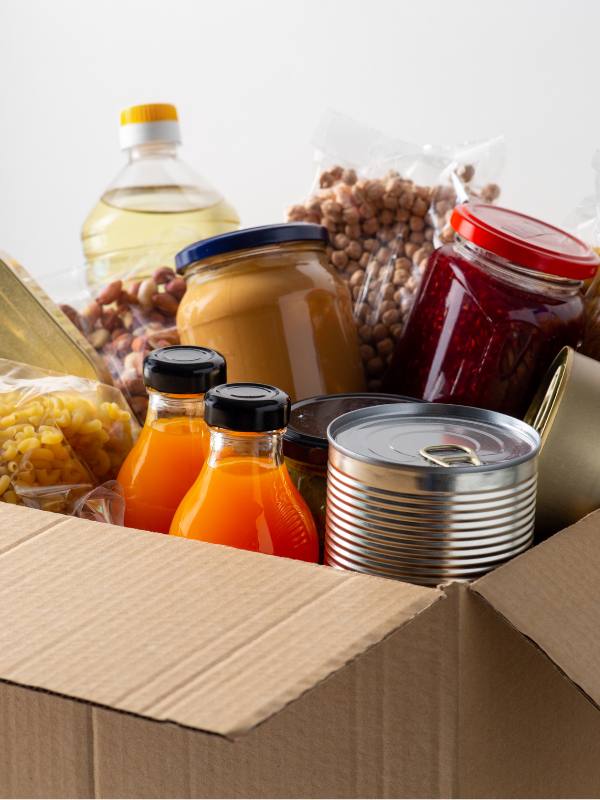
Australian customs prohibit the import of food items to keep the country free of invasive species and diseases that could devastate its environment. Fresh produce is almost entirely banned, including fruit, vegetables, and "glacé" fruit centres, unless they are highly processed. Most meat products, whether fresh, dried, or frozen, are also strictly prohibited due to the risk of carrying foot-and-mouth disease.
Dairy products, including cheese, milk, yoghurt, and eggs, are subject to similarly rigorous standards to prevent the spread of bovine and avian diseases. Honey and bee products must always be declared, as they can carry American Foulbrood, a disease that threatens Australia's bee populations.
When shipping items in unaccompanied luggage, any food must be in its original, unopened commercial packaging with a clear English ingredient list. Homemade treats, such as cakes, brownies, or jams, are considered a high biosecurity risk because customs officials cannot verify their processing temperatures or ingredients.
Grains, seeds, and nuts also pose a high risk as they can introduce "hitchhiker" pests or invasive weed species. Most shelled raw nut kernels (such as almonds, walnuts, or cashews) are typically permitted for personal use if they are free of shells, husks, and soil.
Raw peanuts and any nuts still in their shells or green husks are strictly prohibited, as are raw rice and unpopped popcorn, which can harbour the Khapra beetle, one of the world's most destructive grain pests. Even dried herbs and spices must be declared and inspected to ensure they are free of viable seeds and soil contamination.
As regulations often change, it's advisable to check the latest ABF guidance before shipping.
Seven Seas Worldwide prohibits the shipping of food items on all of our services. Please reference our Prohibited Goods page for the most up-to-date information.
Seven Seas Worldwide prohibits the shipping of food items on all of our services.
More advice about shipping to Australia

Australia customs declaration: B534 form
Australia's B534 form is a mandatory document for those returning or moving to Australia that allows you to import personal effects tax-free. Learn more.

Prohibitive goods
Before packing, check this list of items prohibited from entering a particular country or region.

Moving to Australia
If you're considering moving to Australia, read our essential guide and learn everything from emigrating tips to finding a job and booking removals to Australia to understanding the culture.

Australian visa types
Australian visa types include tourist, skilled worker, student and prospective marriage visas. Read this guide to learn how to apply for an Australian visa.
Sign up to find outmore about our MoveCube®!

Looking for safe and secure international shipping and removals?