Paul is a content writer here at Seven Seas Worldwide. He has a passion for communicating directly with customers in way that both informs and engages.


Shipping update
The historic maiden voyage of the world's largest cargo sailboat
Enter the Neoliner Origin — a revolutionary sailboat marking a return to wind power.
A new era of sustainable shipping
With approximately 3% of global greenhouse gas emissions (GHG) attributed to the shipping industry, the sector is facing growing pressure to adopt more sustainable practices. Enter the Neoliner Origin — a revolutionary sailboat marking a return to wind power.
The massive cargo vessel, brainchild of French company Neoline, recently completed its first transatlantic crossing, demonstrating that wind-powered commerce is not just a dream but a viable reality.
How the Neoliner Origin works
Designed by French naval engineers, the Neoliner Origin uses advanced navigation and automated sail management to operate efficiently with a small crew. The vessel is 136 metres (446 feet) long and 24.2 metres (79.4 feet) wide, with a cargo capacity of up to 5,300 tonnes. Its primary propulsion comes from two 216-foot carbon fibre wind masts, which carry sails covering a combined area of nearly 32,300 square feet.
Neoline designed the vessel primarily as a roll-on/roll-off (ro-ro) cargo ship, ideal for transporting cars, machinery, specialised goods, and 20-ft and 40-ft shipping containers. An auxiliary diesel-electric engine ensures the ship maintains a reliable commercial speed of around 11 knots, even when the winds are less cooperative.

Key facts about the Neoliner Origin
| Length | 136 m |
| Width | 24.2 m |
| Total sail area | 3,000 m² |
| Power (diesel-electric) | 4,000 kW |
| Commercial speed | 11 kts |
| Max. motor speed | 14 kts |
| Crew | 13 |
| Passengers | 12 (6 double cabins) |
Source: neoline.eu
Crossing the Atlantic: the maiden voyage
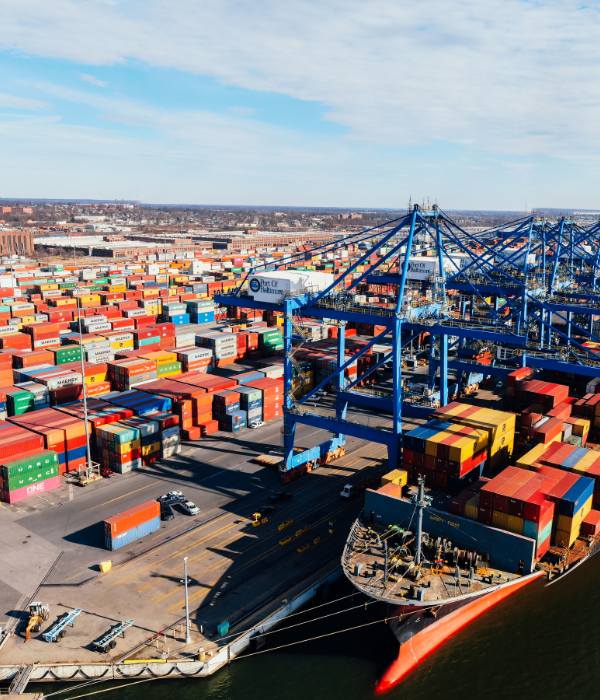
Departing from Nantes, France, the Origin navigated the Atlantic, making a strategic stop at the French territory of Saint Pierre and Miquelon before reaching the Port of Baltimore in the US. While the journey showed the potential of wind power, a powerful storm early in the crossing caused minor damage to the vessel's aft (rear) sail. As a result, the crew had to rely on the auxiliary engine and the remaining intact headsail to continue the voyage.
Despite the setback, the vessel demonstrated impressive resilience, reaching its destination with only a short delay. Neoline's CEO described the crossing as a valuable test of handling large sails in North Atlantic conditions, particularly during late-season storms. The company aims to operate monthly services between Europe and North America, reducing GHG emissions by an estimated 80% to 90% compared with similarly sized traditional cargo ships.
Here are some additional resources if you would like more information on the Neoliner Origin's first Atlantic crossing: