

Moving overseas advice
Best countries for digital nomads
Key takeaways
- A digital nomad is someone who works remotely while travelling, often moving overseas to different countries.
- Digital nomad visa countries include Portugal, Thailand, Turkey, Brazil, Puerto Rico and South Africa — between 60 and 70 nations offer visas for remote workers!
- The best countries for digital nomads are Spain, the Netherlands, Uruguay, Canada, Czechia, Portugal, France, the UAE, Germany, and Malta, according to Global Citizen Solutions' Global Digital Nomad Report 2025.
What is a digital nomad?
A digital nomad is someone who works remotely while travelling, often moving overseas to different countries. They use readily available technology, including laptops, mobile phones, broadband, and cloud-based applications, to perform their jobs from anywhere in the world. Since digital nomads don't need to remain in one location, such as an office, they often choose to work in cafes, libraries, co-working spaces, and temporary accommodations.
Most digital nomads work in fields that rely heavily on computers, such as writing, programming, graphic design, social media influencing, marketing, or consulting. Their jobs also often allow flexible working hours, giving them the freedom to plan their day around travel, language learning, socialising or cultural experiences.
Digital nomads tend to move frequently, often relocating to a new city, town, or country every few weeks or months. They choose locations based on cost of living, climate, internet speed and reliability, the population of fellow digital nomads or expats, as well as cultural and sightseeing opportunities.
A typical digital nomad is in their twenties to late thirties, single or without children, and earns an average annual salary of US$123,762 (£94,429/€107,094) in 2025. They value flexibility, personal growth, independence, and new experiences over material possessions and stability. Most are self-motivated, disciplined, minimalistic, and comfortable navigating unfamiliar cultures while balancing work responsibilities.
Challenges for digital nomads include managing visas, taxes, safety, health insurance, and reliable internet. Remaining productive while constantly on the move requires discipline, but for many, the benefits outweigh the challenges.
Post-pandemic growth of digital nomad visas
The COVID-19 pandemic significantly accelerated the adoption of digital nomad lifestyles. Remote work has become increasingly accepted, and many companies have adopted flexible policies that allow employees to work from anywhere with internet access. In the US alone, the number of individuals identifying as digital nomads grew to 18 million in 2024, representing a 148% increase from 2019.
Since the pandemic, over fifty countries have introduced specific digital nomad visas. Many nations have also improved their infrastructure to attract remote workers, such as expanding co-working spaces, introducing fibre-optic broadband, developing co-living accommodations, and creating networking expat communities.
Most digital nomads work in fields that rely heavily on computers, such as writing, programming, graphic design, social media influencing, marketing, or consulting.

Cities with the most coworking spaces
The cities with the most coworking spaces are London (UK), New York (USA), Tokyo (Japan), Seoul (South Korea), Barcelona (Spain), Amsterdam (Netherlands), Moscow (Russia), Los Angeles (USA), Toronto (Canada) and San Francisco (USA).
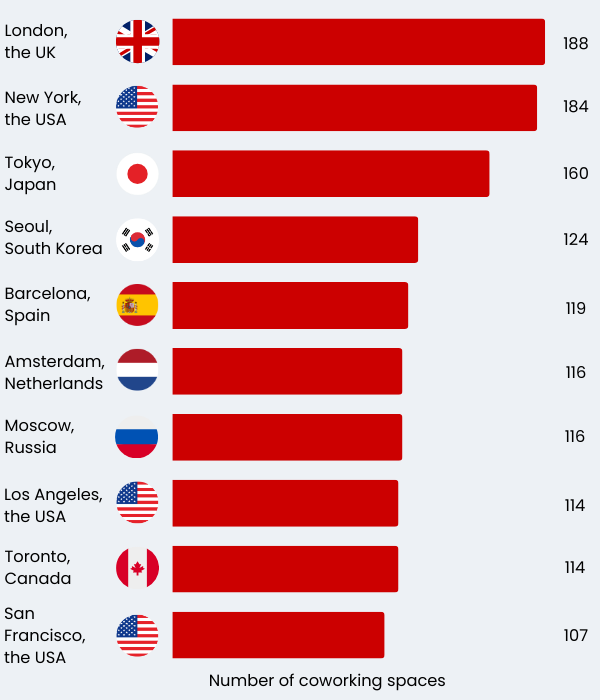
Source: StartupBlink

Digital nomad visa countries
To cater to professionals with higher-than-average incomes, between 60 and 70 countries offer digital nomad visas in 2025. They provide a stable yet temporary home for those who wish to travel, work and meet new people. Unlike regular tourist visas, digital nomad visas allow applicants to earn an income from abroad without violating local work regulations.
Each country has its own requirements, often including proof of sufficient income, health insurance, and a clean criminal record. Many countries prohibit taking on employment with local companies and limit the ability to bring dependents. Visa lengths (typically one year), fees, and renewal rules vary widely.
Portugal's temporary-stay D8 visa, for example, offers stays of up to one year and is renewable for up to five years provided all requirements are met; holders can then apply for a longer-term residence permit. In Asia, countries such as Thailand and Indonesia attract digital nomads with long-term visas, stunning landscapes, and affordable living costs. Caribbean and Latin American countries, including Barbados, Costa Rica, and Mexico, offer digital nomad visas with stays from six months to a year.
The application process is typically conducted online, although some countries may require an in-person visit to a consulate. Processing times vary, so applicants should plan well in advance and ensure all paperwork meets the host country's requirements.
Having a digital nomad visa does not automatically exempt holders from taxation. In many cases, remote workers continue to pay taxes in their country of residence. However, some nations require registration or partial taxation on income earned within their borders.
How many digital nomads are there in the world?*
In the world, there are
+40M digital nomads
Source: Demandsage
*as of 2025

Best countries for digital nomads 2025*
The best countries for digital nomads are Spain, the Netherlands, Uruguay, Canada, Czechia, Portugal, France, the UAE, Germany, and Malta, according to Global Citizen Solutions' Global Digital Nomad Report 2025. The report assesses 64 countries using a data-driven methodology to identify the most welcoming destinations for remote workers.
To generate each country’s score out of 100, Global Citizen Solutions evaluated six key markers informed by research, surveys, expert analysis, and client insights. These markers include Procedure (visa costs, income requirements, visa length, and application or extension options), Citizenship and Mobility (Schengen access and pathways to permanent residency), Tax Optimisation (tax systems and benefits), Economics (co-working desk prices and cost of living), Quality of Life (overall living standards and climate), and Tech & Innovation (internet speed, reliability, and global innovation).

1. Spain
Spain's best-placed marker on the Global Digital Nomad Report 2025 was 2nd for "Citizenship and Mobility". La España attracts digital nomads thanks to its favourable climate, diverse landscapes, flavoursome cuisine, bustling cities, and picturesque towns. Accommodation options include affordable shared apartments and hostels, as well as more expensive serviced apartments in larger cities.
The cost of living varies by region, with smaller cities generally more affordable than Barcelona, Madrid, or Valencia. On average, a digital nomad in Spain can expect to spend approximately €1,581 (around US$1,822/£1,392) per month, covering rent, food, transportation, and leisure activities.
Global Digital Nomad score: 99.67
Official language: Spanish
Climate: Mediterranean (mild winters; hot, dry summers)
Safety: high
Digital nomad visa: 1 year (renewable) or 3 years if applying within Spain
2. Netherlands
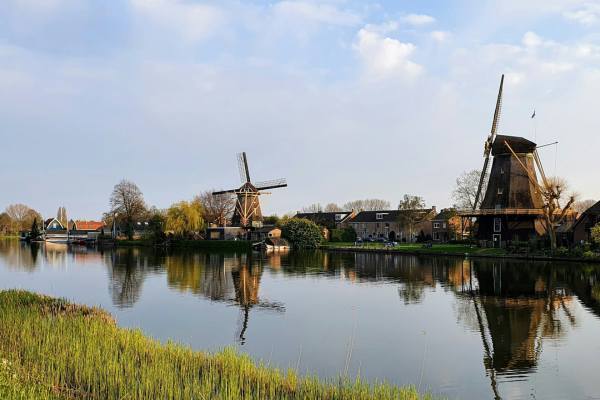
The Netherlands's highest-placed marker on the report was 1st for "Quality of Life". The country is an ever-popular destination for digital nomads, thanks to its progressive culture, integrated cycling infrastructure, and widespread use of the English language — an estimated 90% of Dutch residents can hold a conversation in English. In major cities like Amsterdam and Rotterdam, contemporary studios, co-living spaces, and fully furnished apartments are available.
The cost of living is relatively high: on average, a digital nomad in the Netherlands can expect to spend roughly €2,406 (around US$2,772/£2,120) monthly, covering rent, groceries, transport passes, and socialising.
Global Digital Nomad score: 92.84
Official language: Dutch
Climate: Oceanic Temperate (mild winters; mild summers)
Safety: high
Digital nomad visa: none; alternatives include the self-employed residence permit and the Dutch-American Friendship Treaty
3. Uruguay
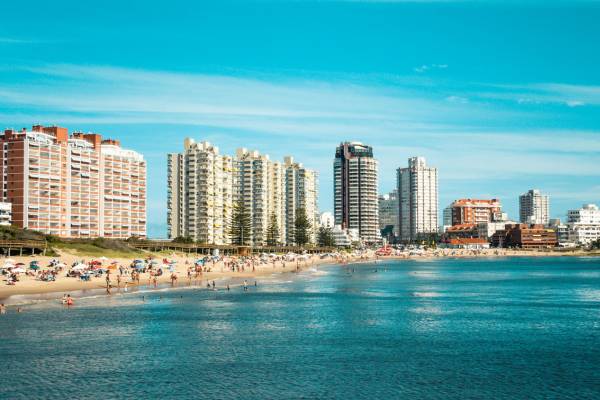
Uruguay's best-placed marker on the Global Digital Nomad Report 2025 was 14th for "Tax Optimisation" (91.12). Remote workers are attracted to the country's stable economy, safe environment, relaxed coastal lifestyle, and rolling hills. Montevideo and Punta del Este offer modern apartments, shared housing, and rental flats.
The country has a growing number of co-working spaces. The cost of living is relatively affordable; on average, a digital nomad in Uruguay can expect to spend roughly $U60,112 (approximately US$1,511/£1,159/€1,316) per month, which covers rent, groceries, transportation, and socialising.
Global Digital Nomad score: 91.23
Official language: Spanish
Climate: Temperate (mild winters; warm summers)
Safety: moderate
Digital nomad visa: 6 months (renewable); there is no minimum income requirement

4. Canada
Canada ranked 5th on the Global Digital Nomad Report for "Procedure". Varied natural landscapes, multicultural urban cities, and welcoming people are just a few reasons why the country is appealing. Bustling hotspots, such as Toronto, Vancouver, and Montreal, offer a wide range of housing options, including modern apartments and co-living spaces.
On average, a digital nomad in Canada should set aside roughly CA$3,272 (around US$2,323/£1,775/€2,012) per month to cover rent, food shopping, travel, and socialising.
Global Digital Nomad score: 90.42
Official language: English and French
Climate: Temperate/Continental in the south (cold winters; warm summers), Subarctic/Polar in the north (very cold winters; cool summers)
Safety: moderate
Digital nomad visa: none; alternatives include the Temporary Resident visa and the Working Holiday Scheme
5. The Czech Republic
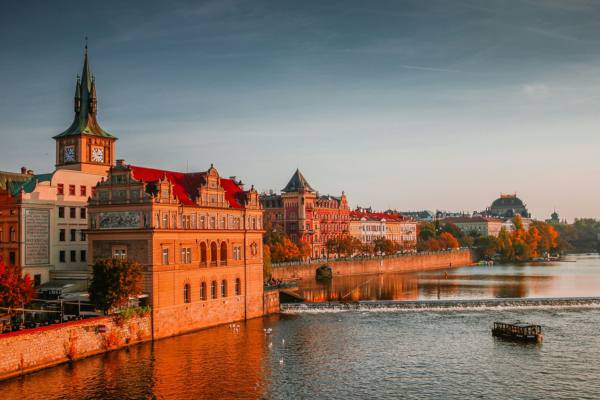
The Czech Republic's highest ranking marker on the Global Report was 3rd for "Citizenship and Mobility". The Land of a Thousand Castles attracts digital nomads with its blend of historic charm and modern amenities. Accommodation in Prague, Brno, and other towns ranges from shared apartments and hostels to well-equipped long-term rentals.
Reliable internet and a welcoming expat community make it an ideal location for remote work. Monthly, a digital nomad living in the Czech Republic requires, on average, Kč36,804 (around US$1,751/£1,337/€1,527) for rent, groceries, travel, and social activities.
Global Digital Nomad score: 90.17
Official language: Czech
Climate: Temperate Continental (cold winters; warm summers)
Safety: high
Digital nomad visa: 1 year (renewable); minimum income per month of Kč60,530 (around US$2,889/£2,203/€2,511)

6. France
France ranks first in the Global Digital Nomad Report 2025 for "Tech and Innovation". With stunning landscapes and high-quality technological amenities, it's easy to see why the country appeals to curious digital nomads.
Reliable, fast internet with an average speed of 243 Mbps, and a growing number of co-working spaces support remote work in both big cities and small towns. Digital nomads in France should set aside, on average, €1,682 (around US$1,937/£1,481) per month, which covers rent, food shopping, travel passes, and socialising.
Global Digital Nomad score: 90.12
Official language: French
Climate: Temperate in the north (mild winters; warm summers), Mediterranean in the south (mild winters; hot summers)
Safety: moderate
Digital nomad visa: none; alternatives include the Passeport Talent visa and the Long-Stay visitor visa (VLS-TS)
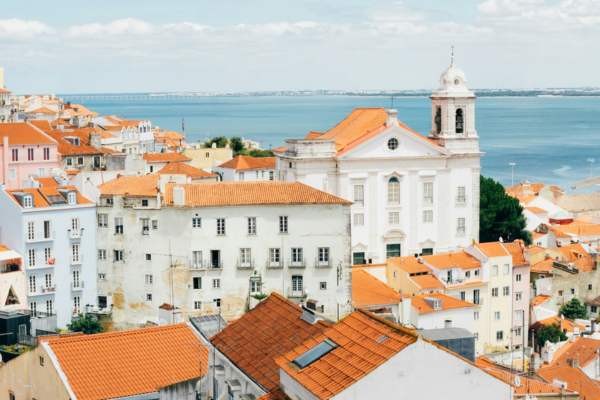
7. Portugal
Portugal's highest placed marker on the Global Digital Nomad Report is 4th for "Citizenship and Mobility". The Iberian nation is a top choice for digital nomads due to its year-round sunshine and laidback culture. Major cities like Lisbon, Porto, and Faro offer a diverse range of accommodations, including affordable shared and fully furnished apartments.
English proficiency is very high, and 88% of the country has internet access. The cost of living is generally affordable: digital nomads living in Portugal typically need, on average, €1,564 (approximately US$1,800/£1,377) per month to cover rent, groceries, travel, and entertainment expenses.
Global Digital Nomad score: 90.12
Official language: Portuguese
Climate: Mediterranean (mild winters; hot, dry summers)
Safety: high
Digital nomad visa: 1 year (renewable); minimum income per month of €3,480 (around US$4,014/£3,061) required
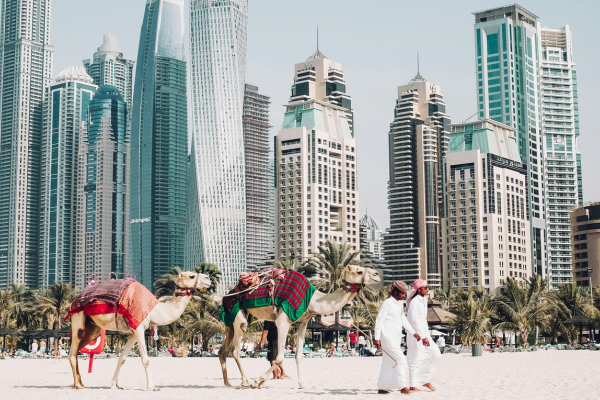
8. The UAE
The UAE's highest-placed marker on the Global Digital Nomad Report 2025 is 1st for "Tax Optimisation". Dubai and Abu Dhabi entice digital nomads with the promise of tax-free incomes, safe streets, futuristic infrastructure and large expat communities. Accommodation options range from serviced apartments to luxury flats.
Numerous networking events, growing co-working hubs and the UAE's travel-friendly location make it a practical base for remote work. Digital nomads living in the UAE require, on average, AED9,674 (around US$2,634/£2,015/€2,259) per month for rent, grocery shopping, travel, and going out.
Global Digital Nomad score: 90.04
Official language: Arabic
Climate: Desert (mild/cool winters; very hot summers)
Safety: very high
Digital nomad visa: 1 year (renewable); minimum income per month of US$5,000 (around £3,816/€4,336) required

9. Germany
Germany's best-placed marker on the Global Digital Nomad 2025 Index is 5th for "Quality of Life". Deutschland is a top choice for digital nomads, thanks to its comprehensive and efficient public transport, strong healthcare services, and widespread English proficiency. Berlin, Munich, and Hamburg feature relatively affordable apartments, shared flats, and co-living spaces compared to other major European cities.
The country boasts excellent internet infrastructure and a growing network of startups and young innovators. Digital nomads in Germany typically require approximately €1,852 (around US$2,133/£1,629) per month to cover rent payments, groceries, a travel pass, and entertainment expenses.
Global Digital Nomad score: 89.65
Official language: German
Climate: Temperate (cold winters; warm summers)
Safety: high
Digital nomad visa: none; alternatives include the Freelance visa (Freiberufler) and the Self-Employed visa
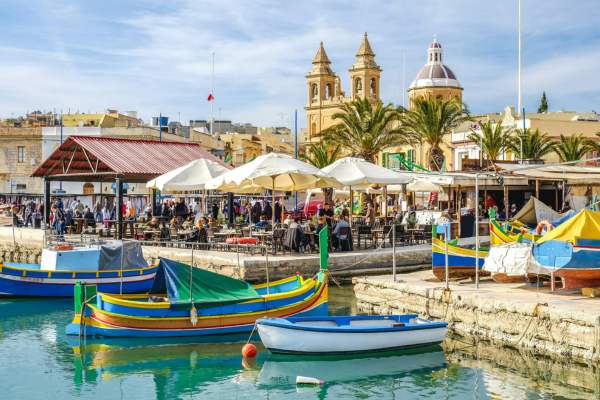
10. Malta
Malta's highest placed marker on the Global Digital Nomad Index is 14th for "Tech and Innovation". The island nation appeals to digital nomads thanks to its Mediterranean coastal weather, English-speaking population, and easily commutable size. Valletta, Sliema, and St. Julian's all feature rental flats, shared apartments, and serviced residences.
The Republic also boasts one of the world's highest-quality internet. The cost of living is considered moderate: digital nomad workers living in Malta need roughly €1,741 (approximately US$2,005/£1,532) per month to cover rent, groceries, transportation, and socialising.
Global Digital Nomad score: 89.45
Official language: Maltese and English
Climate: Mediterranean (wet, mild winters; hot, dry summers)
Safety: moderate
Digital nomad visa: 1 year (renewable); minimum income per month of €3,500 US$5,000 (around £4,033/GBP3,081)
*figures accurate as of 2025
Sources: numbeo.com, weather.metoffice.gov.uk, citizenremote.com
Find more moving overseas advice

Permanent resident vs citizen
Permanent residents and citizens both share similar rights, but permanent residents can't vote, hold a passport, or run for office.

Seven Seas Worldwide's Movers Report 2025
The most moved to countries are Luxembourg, Switzerland, Denmark, Australia, and Spain, according to the Seven Seas Worldwide 2025 Movers Report.

Visa guide
A visa is an official travel document that grants you permission to enter, stay, or leave a country during a set time. Read this to learn how to get a visa and more.

Most beautiful country in the world
The most beautiful countries in the world are Greece, New Zealand, Italy, Switzerland, Spain and Thailand. Click to discover the most beautiful cities and states.
Sign up to find outmore about our MoveCube®!

Looking for safe and secure international shipping and removals?